The Cochlear Implant
What is a CI?
High-tech behind the ear – The Cochlear Implant (CI)
Cochlear implants are used in cases of severe inner ear hearing loss when the cochlea no longer
functions properly. In such cases, sound waves are no longer converted into nerve impulses. The cochlear implant takes over this task by directly stimulating the auditory nerve with electrical signals.
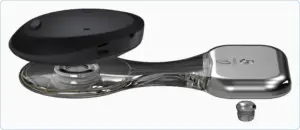
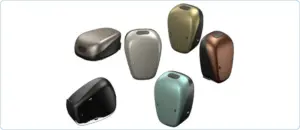
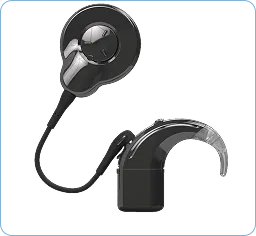
The system consists of two parts. In the external component, speech and environmental sounds are captured by a microphone and transmitted to the sound processor. The sound processor analyzes, filters, and encodes these sounds into electrical impulses.
These impulses are sent through the skin to the internal component, the implant, via a transmitting coil, similar to a radio signal.
A magnet in the coil holds it precisely in place over the implant. The implant is surgically placed behind the ear. It receives the converted signal and transforms it into electrical impulses once again. These impulses are delivered directly into the cochlea via an electrode array, where the endings of the auditory nerve are located.
A magnet in the coil holds it precisely in place over the implant. The implant is surgically placed behind the ear. It receives the converted signal and transforms it into electrical impulses once again.
The fastest progress is typically seen in individuals who became deaf suddenly due to sudden hearing loss.
Dieses Implantat wird in einer Operation hinter dem Ohr eingesetzt. Hier wird das umgewandelte Signal empfangen
und wiederum in elektrische Impulse umgewandelt. Diese Impulse werden von einem Elektrodenbündel direkt in die Hörschnecke geleitet,
wo sich die Enden der Hörnerven befinden.
“Electronic hearing” naturally differs from normal hearing. Individual outcomes with a cochlear implant vary significantly.
The fastest progress is typically seen in individuals who became deaf suddenly due to sudden hearing loss.
Since their auditory and speech centers are already developed, the brain can process the new auditory impressions relatively quickly.
About two-thirds of these patients are able to understand speech again without lip reading or even use the telephone.
Although sounds and words may initially seem different and music may not sound pleasant at first, targeted training can significantly improve musical perception over time.
Children born deaf achieve the best results when implantation takes place as early as possible, ideally between the first and second year of life.
During this period, brain structures develop optimally to process new auditory input.
The use of cochlear implants for people with hearing impairment began in the early 1980s.
Since then, more than 700,000 people worldwide have benefited from this technology.
If the implantation is performed later, it may take correspondingly longer for the positive results to become visible.
The use of cochlear implants for the hearing impaired began in the early 1980s.
Since then, more than 700,000 people worldwide have benefited from this technology.

© Cochlear Limited 2024. Image courtesy of Cochlear Limited.
Types of Sound Processors
Cochlear implant (CI) sound processors are available in different types,
varying in functionality, wearing style, and additional features.
The most common types include:
1. Behind-the-Ear (BTE) Sound Processors
- Description: These processors are worn behind the ear
and resemble conventional hearing aids.
- Features: They are compact and house the microphone,
battery, and speech processor in a single unit. A cable connects the
processor to the transmitting coil positioned on the scalp over the implant.
- Advantages: BTE processors are lightweight and discreet.
They often offer flexible wearing options, such as special ear hooks or clips
for improved retention.
- Examples: Cochlear Nucleus 8, MED-EL Sonnet 2,
Advanced Bionics Naída CI Q90.
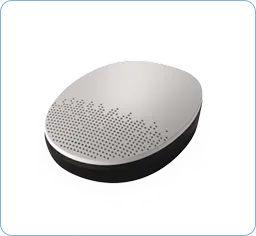
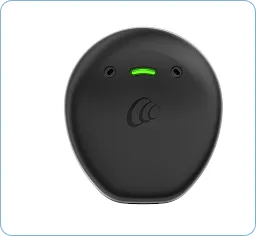
2. Off-the-Ear Sound Processors:
- Description: These processors are worn directly
on the head at the location of the transmitting coil.
- Features: They combine the microphone, battery,
and speech processor in a single unit that is held in place on
the scalp by a magnet.
- Advantages: This design is very discreet, as nothing is worn behind the ear.
They are often water-resistant and well suited for sports and
active lifestyles.
- Examples: Cochlear Kanso 2, MED-EL Rondo 3.
© Cochlear Limited 2024. Image courtesy of Cochlear Limited.
© Cochlear Limited 2024. Image courtesy of Cochlear Limited.
© Cochlear Limited 2024. Image courtesy of Cochlear Limited.
Further information on cochlear implants can be found on the websites of the respective manufacturers.
- Cochlear: Cochlear™ Nucleus® System (cochlear.com)
- MED-EL: Cochlea-Implantate von MED-EL (medel.com)
The appropriate hearing system is usually selected and, if necessary, implanted by ear, nose, and throat (ENT) specialists and hearing aid acousticians in close collaboration with the patient. It is important to note that no single hearing system is equally suitable for all people with hearing loss. Therefore, the decision to opt for a cochlear implant also requires a comprehensive audiological evaluation and consultation with healthcare professionals.